
As I mentioned in the last post, I had a goal of using my serger for the very first time after months of owning it. In November 2024 (around Black Friday) I purchased an entry level Brother 1034D serger. I had made it as far as taking it out of the box in early January. But finally (finally!), I have not only turned it on but made a full garment with it.
Before jumping into making clothes, I practiced on a few scraps of fabric just to get a feel for the machine. I also threaded the machine, which wasn’t nearly as bad as people say. I have not explored the full extent of the machine’s capabilities, but I feel comfortable using it to finish seams and as the primary method of assembly for knit patterns – the main reasons I wanted a serger in the first place.
What did I sew? I did, in fact, make the Seamwork Lisa Cardigan I mentioned in the Spring-ish Makes post. I made it out of the thrifted ribbed sweater knit fabric as planned. And boy did I learn some things about ribbed sweater knits and pattern blocks.
Fabric Choices Matter
First, lessons in fabric. Main takeaway: ribbed sweater knits are a real pain. It is funny that days after finishing the sweater Seamwork Radio, the weekly podcast from the designers behind the pattern I used, had an episode about 10 Must-Have Tools to Sew with Knits. Let just say, these tips would have been so helpful BEFORE I made the pattern.
In all the years I have sewed, I have pretty much stuck to woven fabrics. The few exceptions have been in the last year when I made Helen’s Closet’s Luna Tank (my favorite tank top to sleep in) and the Harper Cardigan from Sinclair Patterns (which I love!). BTW, those are free patterns!
One of the reasons I haven’t made many knit items is because I source most of my materials from the thrift store, often in the form of household linens like sheets, table clothes, and duvet covers. The second reason is knits scared me – they stretch and shift in different ways to woven fabrics. And despite my success using my regular machine with a zig-zag stitch to make the two garments mentioned above, I really felt knit projects were best left until I got a serger.
With very little experience sewing with any knit material, I jumped in with both feet to using one of the most challenging forms of knit fabric (this really feels par for the course for me, honestly). Sweater knit tends to be very stretchy in one direction (more on that in a minute) and the ribs just add to the challenge of cutting pattern pieces without distorting the fabric.
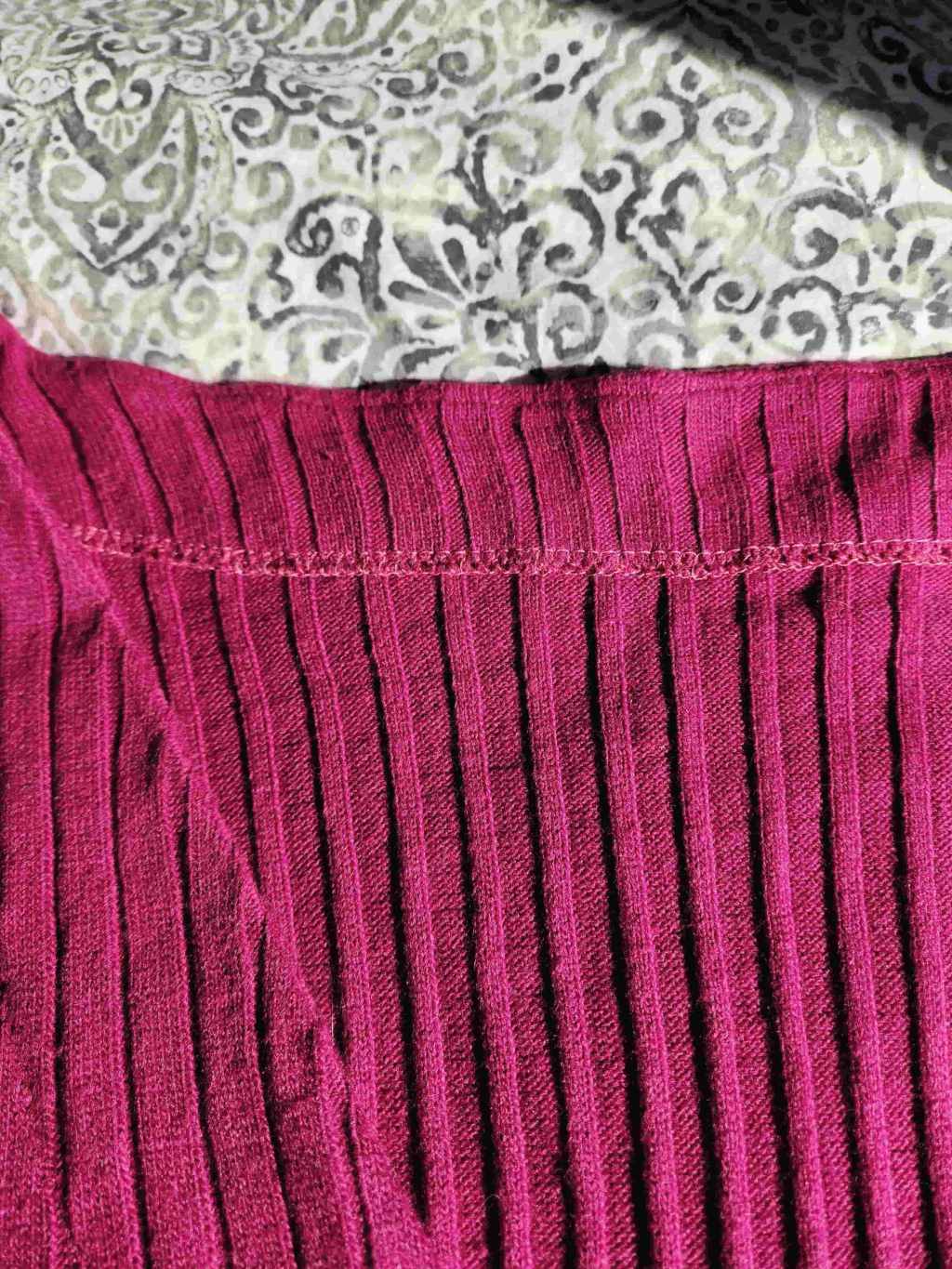
I was very careful in laying out and cutting the pattern to avoid stretching the fabric but when it came to putting the pieces together, stretching happened. As you can see here on the neckline, the material did stretch when I attached the facing.
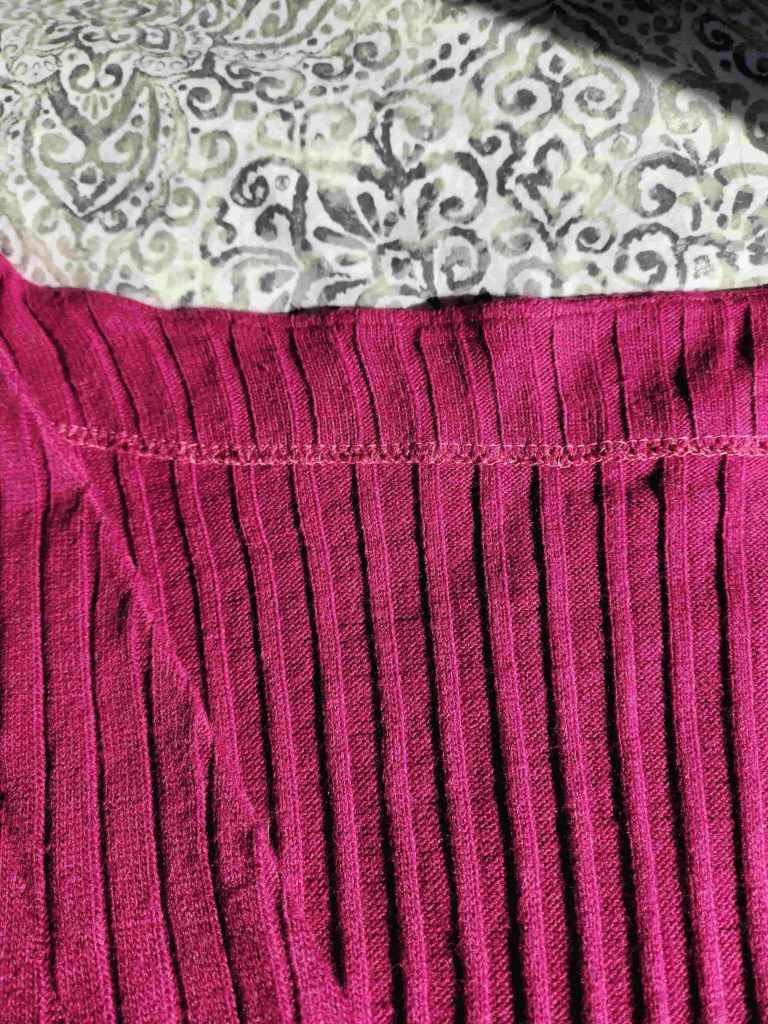
It was also really challenging to get the facing the for the button band attached and keep all the ribbed lines vertical (it doesn’t show much in the picture, but it isn’t great looking). The bottom hem also ended up a wavy mess.
The lessons I learned about knit fabric were that a serger is great, but other tools are sometimes needed too. For the hem, I think both a walking foot and using something to stabilize the material like Wonder Tape or spray starch would have prevented the wavy uneven appearance. Same with the neckline – stabilizing the sections in which I was sewing against the ribs (aka the direction the fabric stretches the most) would have helped keep everything more true to the pattern.

Just Because a Pattern Comes in Your Size, Doesn’t Mean it Will Fit Well
The second lesson I learned was related to pattern blocks which are the foundation that pattern makers use to draft patterns and manipulate designs. Pattern blocks are also used by designers to create ready-to-wear clothing. In theory, the closer a pattern block is to your body, the better the final garment (whether sewn from a pattern or purchased at the store) will fit you the way it was designed or intended to.
In my experience, the assumption is if you are plus-sized you have broad shoulders and a big bust. For me, this results in shirts that may fit my waist and hips but the shoulder seam is halfway down my arm. I find this often when trying on ready-to-wear clothes from plus-size brands like Torrid. As if having a bigger body isn’t hard enough, trying on these clothes, supposedly made for bodies like mine, make me feel like I am not even fat the right way.
The cool thing about sewing is that you can adjust patterns so clothes fit the way you want on the body you actually have. That said, if a pattern block a designer uses is very different from your body, you will end up with a lot of adjustments.
This is the a-ha I had about Seamwork patterns when I tried on the finished Lisa Cardigan. This sweater is not the first Seamwork pattern I have made. The first was the Hansie Top, a woven boxy t-shirt, which I love, wear often, and will make again.

My second Seamwork pattern was the York Top. I selected the size based on my measurements and my experience with the Hansie top. It ended up comically large in the shoulders and chest. So large that I just set it aside and moved on to another project.
Remembering my experience with the York Top, I was very careful in considering the Lisa Cardigan. I looked at my measurements on the size chart, the finished garment measurements, and even sized down based on my experience with the York Top and the more oversized fit of the cardigan and the stretchiness of the knit material.
I cut and sewed the pattern in a size 18, 1-2 sizes smaller than my measurements indicate. I even considered sewing it in the straight-sized 16 (which might have been the move). The finished product is so oversized in the shoulders (and not just due to the fabric stretching at the neckline, though that probably doesn’t help) that it is just not comfortable to wear.
I have concluded that most Seamwork top patterns (I haven’t tried any pants yet) are designed for people with much broader shoulders and a larger bust (they do state it is drafted for a DD). I could probably make both the York and the Lisa work if I made a narrow shoulder adjustment and a small bust adjustment but I would rather just use a pattern from a designer whose pattern block is a better fit for me or at least offers cup-size options in the pattern.
So, a serger success, but a garment fail. I will add the Lisa cardigan back to my fabric pile to refashion into something different in the future (once I get a walking foot and some knit fabric stabilizers!).






Leave a Reply